
What is Ramadan?
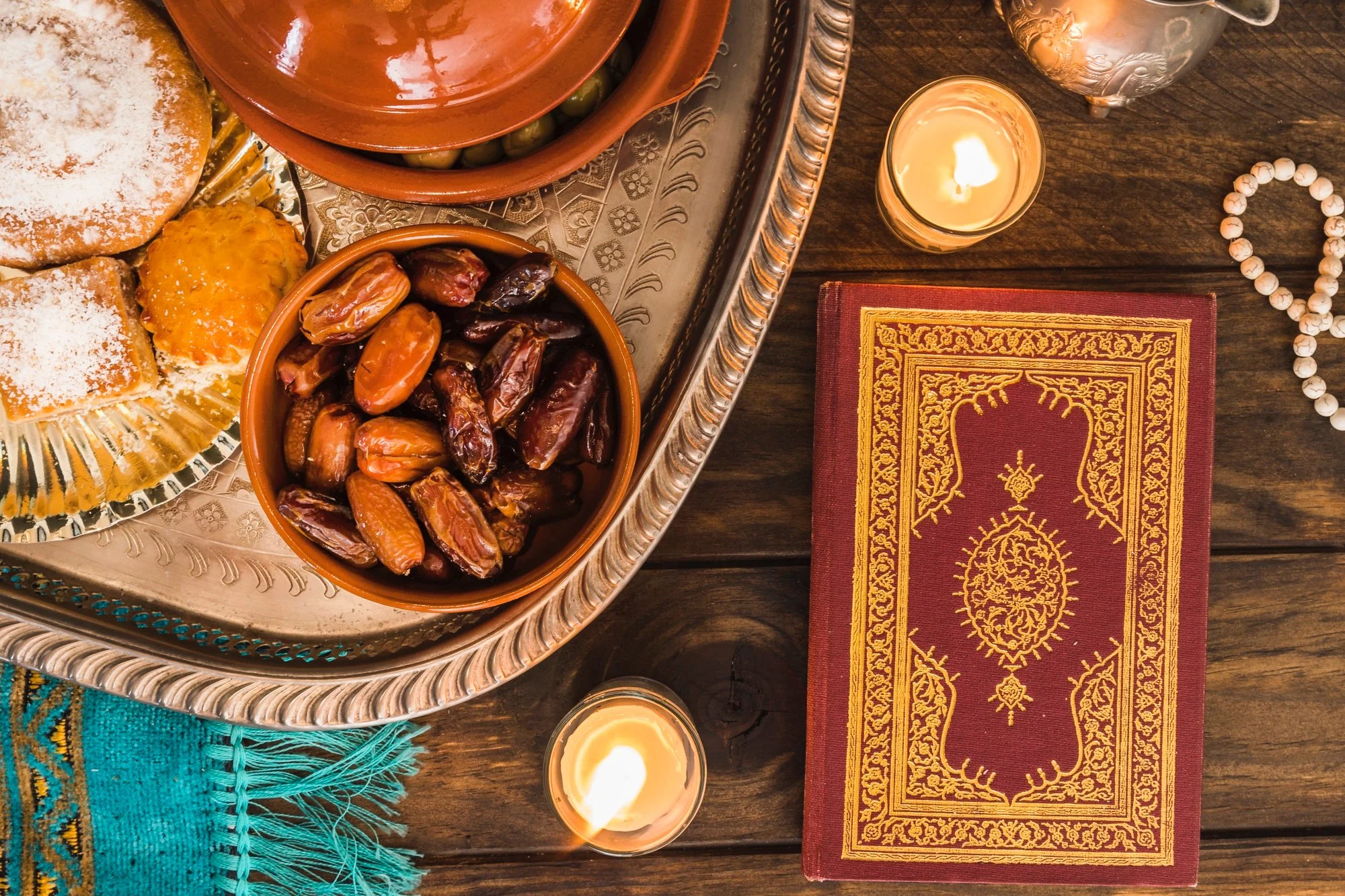
Ramadan is the month of fasting and is also considered the month of revelation in which Muslims believe not only the Qur’an was revealed via the Archangel Gabriel (Jibreel in Arabic) to Muhammad (peace be upon him) but also the previous scriptures such as the Gospel to Jesus and Torah to Moses (peace be upon them).
Why is Ramadan?
The primary purpose of fasting the month of Ramadan is to increase ones’ realisation of the relationship with one’s Creator and piety. Muslims also believe that fasting in different forms was very much part of previous revelations. Going without food and water makes you contemplate how needy and dependent we really are and so brings the human ego down to earth. We can also contemplate how dependant we are on others, appreciate how interdependent everything in the world around us is and how ultimately everything depends on the Creator, Sustainer, and Maintainer. After the month of fasting is complete the celebration of Eid Al- Fitr takes place.
How is Ramadan observed?
Fasting in Ramadan is for the lunar month from dawn to dusk. It’s also a time for focusing on reading the Qur’an, charity, visiting the sick and needy, being hospitable, and increasing one's overall good deeds – these things are pretty universal around the world. Muslims are from all corners of the world and native too so there’ll be all sorts of culinary traditions which will vary.
Whilst it is obligatory (fard) there is always common sense and no extremes in Islam. So there are situations where someone might not be fasting – Illness, age, menstruation, travelling. You can make up missed fasts after Ramadan or feed the poor for expiation if you’re not able to.
Why do Muslims fast?
Fasting is one of the five pillars of Islam, coming after the testimony of faith, the five daily prayers, and along with the annual charity and the pilgrimage to Makkah. The Quran mentions that fasting has been made an obligation on Muslims as it was on people before us.
What does a typical fasting day look like?
Muslims will get up before dawn and have some food, perhaps a breakfast amount depending on preferences and culture and the fasting day begins at the start of dawn – so an hour and a half or so before sunrise. No food, drink, smoking etc until sunset when it is common for people to break-fast together as families, in mosques or with friends and colleagues – so very much a social affair. Some of the tastiest food of the year is consumed in Ramadan! Dates are a tradition for breaking the actual fast.
What is the importance of community during Ramadan?
There are special congregational prayers in Ramadan held in Mosques which can last for an hour or two every night (over the month the entire Quran is recited) – this is part of the strong community aspect of Ramadan. People also love to invite friends and family to break-fast together or break-feast more like! A lot of charity also takes place in Ramadan and almost every night there seems to be a collection for a good cause here or abroad. There’s been a lot of special requests for Palestine this year as you might imagine.
Are there any myths you’d like to bust about Ramadan?
Thankfully, Ramadan is a rare time in my experience that there’s a bit more understanding of Muslim practice but I know due to the climate of Islamophobia some Muslims can be reluctant to be overt in the workplace about their fasting. I’d also say that due to the secular society we live in nowadays Muslims sometimes respond to the question of why we fast with answers like, it’s to think about the poor or for health – rather than say it’s to get closer to God.
What can colleagues do to better support Muslim colleagues during Ramadan?
Don’t plan a sports day in Ramadan ;-). Being more considerate around meetings and invites that involve food would be much appreciated, so no team BBQs. Letting people get home in time for breaking fast or preparing food would be considerate. In general Muslims try to keep calm and continue.